} } ?>

What Are Rubber Stamps Used for in Modern Offices? (2026 Guide)

03 June 2026

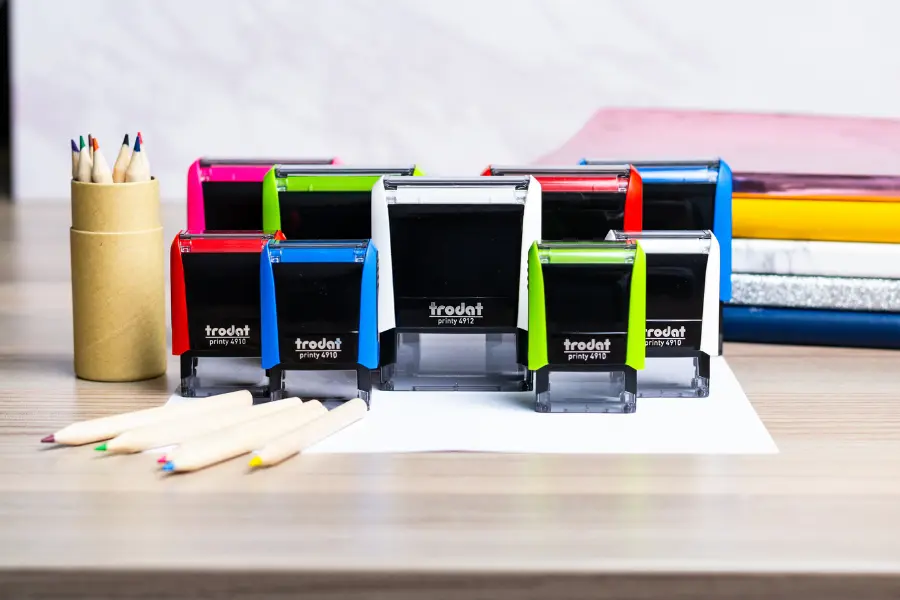
colourful Trodat Printy stamps on work desk

With cloud storage, electronic signatures and digital workflows becoming increasingly common, many people assume that rubber stamps have become obsolete.

In reality, rubber stamps continue to play an important role in offices across South Africa and around the world. From accounting departments and legal firms to schools, healthcare facilities and corporate offices, businesses still rely on stamps to improve efficiency, maintain consistency and streamline administrative processes.

In 2026, rubber stamps remain one of the simplest and most cost-effective tools for handling everyday paperwork and document management.

The Myth of the Paperless Office</h2?

For years, businesses have been working toward paperless environments. While digital tools have transformed many processes, physical documents remain part of daily operations for countless organisations.

Contracts, invoices, delivery notes, approval forms, applications and compliance documents are still frequently printed, reviewed and filed. Many businesses use a combination of digital and physical systems to manage information efficiently.
Industry experts continue to highlight that successful workplaces often combine digital tools with practical administrative processes rather than relying on a fully paperless environment. Resources from DocuSign discuss how organisations are reducing paper usage while still maintaining effective document workflows, while business platforms such as Deel continue to emphasise the importance of structured administrative processes in modern organisations.

This is one reason rubber stamps continue to provide value in today’s workplace.

Why Businesses Still Use Rubber Stamps

Rubber stamps offer several practical advantages:

  • Save time on repetitive tasks
  • Create consistent document markings
  • Reduce handwriting errors
  • Improve document organisation
  • Support workflow management
  • Help standardise internal processes

Instead of repeatedly writing the same information by hand, employees can apply a clear and professional stamp in seconds.
For busy offices, these small time savings can add up significantly over the course of a year.

Common Rubber Stamps Used in Offices

Many organisations use stamps every day without giving much thought to how often they appear in business processes.

Popular office stamps include:

  • PAID
  • RECEIVED
  • APPROVED
  • CONFIDENTIAL
  • COPY
  • SCANNED
  • FILED
  • URGENT
  • COMPLETED
  • DATE STAMPS

These simple markings help employees quickly understand the status of a document and reduce unnecessary delays.

How Administration Departments Use Rubber Stamps

Administrative teams are often responsible for managing large volumes of paperwork.

Rubber stamps help administration staff:

  • Record incoming documents
  • Mark correspondence
  • Track approvals
  • Process forms
  • Organise filing systems

Businesses looking for ready-made office solutions can explore RubberStampSA’s Office Administration Templates:
https://rubberstampsa.co.za/industry-templates/office-administration/

These templates help streamline common administrative tasks and improve consistency across departments.

How Accounting Departments Use Rubber Stamps

Accounting teams process a significant number of financial documents every month.

Stamps can assist with:

  • Invoice processing
  • Payment verification
  • Tax documentation
  • Internal approvals
  • Audit preparation

Common examples include:

  • PAID
  • PROCESSED
  • RECEIVED
  • AUTHORISED

Using standardised markings helps accounting teams process documents efficiently and maintain clear records.

RubberStampSA’s Accounting Templates provide practical options designed specifically for accounting professionals:
https://rubberstampsa.co.za/industry-templates/accounting/

How Legal Firms Use Rubber Stamps

Legal practices continue to rely on precise document management procedures.

Rubber stamps are commonly used to:

  • Record filing dates
  • Mark confidential information
  • Track document versions
  • Confirm receipt of documents
  • Process client paperwork

Because accuracy and consistency are critical in legal environments, stamps help ensure important information is clearly displayed.

Legal professionals can browse industry-specific options through RubberStampSA’s Legal Templates:
https://rubberstampsa.co.za/industry-templates/legal/

How Human Resources Teams Use Rubber Stamps

Human resources departments manage a wide variety of employee records and internal documentation.

Common HR applications include:

  • Employee onboarding paperwork
  • Leave applications
  • Performance reviews
  • Training records
  • Personnel files

Stamps help keep documentation organised and ensure records are processed consistently.

As businesses grow, standardised processes become increasingly important for maintaining efficiency and compliance.

Reception and Front Desk Applications

Reception areas often handle large volumes of incoming correspondence and visitor-related documentation.

Rubber stamps can be used to:

  • Mark incoming mail
  • Record receipt dates
  • Process deliveries
  • Track internal circulation
  • Manage visitor documentation

Date stamps are particularly useful for maintaining accurate records and ensuring documents are processed within required timeframes.

Self-Inking vs Traditional Rubber Stamps

When selecting a stamp, businesses often choose between self-inking and traditional options.

Self-Inking Stamps

Benefits include:

  • Fast and convenient
  • Built-in ink pad
  • Consistent impressions
  • Ideal for high-volume use
  • Minimal maintenance

Traditional Rubber Stamps

Benefits include:

  • Flexible ink colour options
  • Suitable for specialised applications
  • Cost-effective for occasional use
  • Easy to replace ink pads

For many modern offices, self-inking stamps have become the preferred option due to their speed and ease of use.

To learn more about the differences, visit:
https://rubberstampsa.co.za/blog-self-inking-vs-traditional-rubber-stamps/

Are Rubber Stamps Still Relevant in 2026?

Absolutely.

Despite advances in digital technology, businesses continue to process physical documents, maintain records and manage administrative workflows.

Modern organisations often combine digital systems with practical tools that improve efficiency. Rubber stamps remain valuable because they are simple, affordable and effective.

Rather than replacing digital workflows, stamps often complement them by helping businesses manage paperwork that still exists within everyday operations.

Frequently Asked Questions

What are rubber stamps used for in offices?

Rubber stamps are used to mark, organise and process documents. Common uses include approvals, payment verification, date marking and document tracking.

Are rubber stamps still used in modern businesses?

Yes. Many businesses continue to use rubber stamps alongside digital systems to improve efficiency and maintain organised records.

Which departments use rubber stamps most often?

Administration, accounting, legal, human resources and reception departments commonly use rubber stamps as part of their daily workflows.

What is the most common office stamp?

Some of the most commonly used office stamps include PAID, RECEIVED, APPROVED, CONFIDENTIAL and date stamps.

Are self-inking stamps better than traditional stamps?

For high-volume office use, self-inking stamps are often preferred because they are faster, cleaner and more convenient.

Why Rubber Stamps Continue to Support Modern Workplaces

Technology has transformed the way businesses operate, but many workplace processes still involve physical documentation and administrative workflows.

Rubber stamps remain a practical solution for improving efficiency, reducing repetitive tasks and maintaining consistency across departments.

From administration and accounting to legal and human resources, businesses continue to rely on stamps to keep operations running smoothly.

In 2026, rubber stamps are not outdated—they remain a valuable tool that supports modern office productivity.
How to Choose the Right Stamp Size and Ink Type for Your Business

27 May 2026

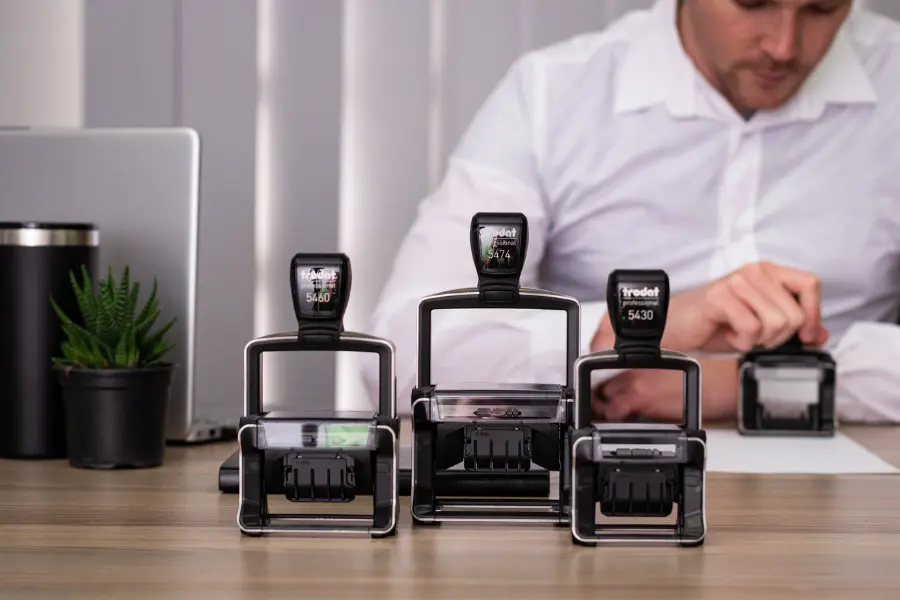
trodat professional rubber stamps being used in a business environment

Introduction

Choosing the right rubber stamp is more important than it may seem. The wrong size can reduce clarity, while the wrong ink type can lead to smudging, fading, or inconsistent impressions on official documents.

For South African businesses using stamps for invoices, compliance, HR, inspections, or branding, selecting the correct combination of size and ink ensures clarity, professionalism, and durability.

Why Stamp Size Matters

Stamp size directly affects readability, layout, and how much information can be included in the design.

Common stamp sizes and uses

  • Small stamps (20–30mm): Suitable for signatures, initials, or approval marks
  • Medium stamps (30–50mm): Ideal for company details, invoice stamps, or addresses
  • Large stamps (50mm+): Used for logos, inspection stamps, or multi-line business information

A stamp that is too small may cut off important details, while an oversized stamp can look unbalanced on documents.

How to Choose the Right Stamp Size

When selecting stamp size, consider the following:

1. Amount of information

More text requires a larger stamp to maintain clarity.

2. Document type

Invoices, packaging, HR forms, and compliance documents all require different layouts.

3. Readability

Text should remain clear and legible at normal viewing distance.

4. Branding requirements

Logos and branding elements need enough space to remain sharp and recognisable.

Understanding Stamp Ink Types

Different ink types affect performance, durability, and suitability for various surfaces.

Self-inking stamps

Self-inking stamps contain a built-in ink pad that automatically re-inks the stamp after each impression. They are fast, clean, and ideal for repetitive office use.

They are commonly used in administration workflows such as those found in office environments like our Office Administration stamp templates.

Pre-inked stamps

Pre-inked stamps produce sharper, more detailed impressions and are often used where branding quality matters. They are ideal for logos and professional documents such as those used in company stamp applications.

Traditional rubber stamps (with separate ink pad)

Traditional stamps offer flexibility in ink types and colours. They are often used in specialised environments such as legal documentation where different inks or repeat stamping variations may be required.

How to Choose the Right Ink Type

Consider the following when selecting ink type:

  • Frequency of use
  • Required level of detail
  • Surface type (paper, packaging, or specialty materials)
  • Importance of branding clarity

For high-volume office environments, self-inking stamps are generally the most efficient. For detailed branding or logos, pre-inked stamps provide the best finish.

Industries such as accounting and medical practices often require a mix of both depending on documentation needs.

Stamp Size vs Ink Type Comparison
Business Need Recommended Stamp Size Best Ink Type
Invoices and administration Medium Self-inking
Logos and branding Large Pre-inked
Signatures Small Self-inking
Inspections Medium to large Self-inking or pre-inked
Occasional use Any size Traditional

Common Mistakes to Avoid

  • Selecting a stamp that is too small for detailed information
  • Using low-quality ink for frequent use
  • Ignoring drying time, which can cause smudging
  • Overcrowding the design with too much text
  • Choosing style before function

FAQs

What is the best stamp size for business use?

Medium stamps (30–50mm) are the most versatile and commonly used for invoices, addresses, and general office applications.

Which ink type lasts the longest?

Pre-inked stamps generally last longer and provide sharper impressions, especially for detailed designs.

Are self-inking stamps better than traditional stamps?

Self-inking stamps are faster and more convenient, making them ideal for frequent office use.

Can one stamp be used for all business needs?

It is possible, but most businesses use multiple stamps for different purposes such as administration, branding, and approvals.

Do rubber stamps work on all paper types?

Most stamps work well on standard paper, but ink type can affect performance on glossy or coated surfaces.

Industry Applications (GEO Cluster Links)

Different industries use stamps in different ways depending on compliance and workflow needs:

These categories help businesses quickly identify the right stamp type based on industry requirements.

Conclusion

Choosing the right stamp size and ink type depends on usage frequency, document type, and the level of detail required. Most South African businesses benefit from a combination of medium self-inking stamps for administration and pre-inked stamps for branding and logos.

5 Things Customers Are Stamping That Might Surprise You

20 May 2026

Creative uses for custom stamps and embossers

5 Things Customers Are Stamping That Might Surprise You

When most people hear “custom stamp”, their first thought is usually office paperwork, invoices, or company documents. Stamps have traditionally been associated with administration and business processes, so it’s understandable.

But spend enough time speaking to customers and a different picture starts appearing.

Some of the most interesting orders come from people using stamps and embossers in ways that have very little to do with office work. What begins as a practical purchase often becomes part of a hobby, celebration, personal collection, or daily routine.

Sometimes customers arrive knowing exactly what they want. Other times, one idea sparks another and a simple stamp becomes part of something much bigger.

Here are some of the more unexpected ways customers are using them.

1. Personal Libraries That Feel Like Real Collections

There’s something satisfying about a bookshelf that feels like your own collection rather than simply a stack of books.

Many book lovers are moving away from writing their names inside books and instead choosing personalised stamps or embossers to create a more classic feel. A “From the Library of…” design instantly gives books a more personal touch while helping identify borrowed books that have a habit of never returning.

Some customers also choose embossers because they create a subtle raised impression directly into the page, adding a premium look without using ink.

Explore custom embossing options here:
Embossers

For readers, journal lovers, and collectors, these small details often turn ordinary books into something that feels like part of a carefully built personal library.

2. Wedding Details That Carry Through the Entire Day

Wedding planning often comes down to details people may not immediately notice individually — but together they create a complete experience.

Many couples use stamps and embossers to keep a consistent theme across multiple elements:

  • Invitations
  • Envelopes
  • Thank-you cards
  • Guest gifts
  • Menus
  • Favour packaging
  • Seating cards

Rather than printing every single item separately, a custom design can be carried through different materials and surfaces.

Couples also love using embossed monograms or initials because they create a clean, elegant finish that feels timeless.

Wedding inspiration can be explored here:
Wedding Templates

Sometimes the details guests remember are the ones that weren’t immediately obvious.

3. Geocaching Signatures That Travel Everywhere

Geocaching has created a community of people who enjoy combining exploration with problem-solving and adventure.

For many geocachers, leaving a mark behind becomes part of the experience.

Instead of writing names repeatedly in small logbooks, many choose personalised pocket stamps that travel easily and create a unique signature wherever they go. Over time, these become recognisable to other people in the geocaching community.

Compact designs are especially popular because they fit easily into bags, pockets, or travel gear.

Pocket stamp options can be found here:
Mobile Pocket Stamps

It’s a small tool, but for enthusiasts it often becomes part of their geocaching identity.

4. Small Businesses Creating Personal Product Experiences

Many businesses today are moving beyond simply stamping a logo.

Customers are using stamps to create personality around products and packaging with messages such as:

  • Packed with care
  • Handmade in South Africa
  • Small batch product
  • Thank you for supporting local
  • Quality checked
  • Made with love

A growing favourite is using Stamp n Stick products, which allow businesses to quickly apply branding and messaging while maintaining flexibility.

Explore options here:
Stamp n Stick

For smaller businesses especially, this creates a practical way to keep branding consistent without needing large packaging print runs.

Sometimes customers remember the small details long after opening the box.

5. Teachers and Parents Turning Progress Into Something Visual

Parents and teachers have found creative ways to make learning more engaging.

Reward systems have evolved far beyond simple tick marks and handwritten comments. Stamps are now being used for:

  • Reading goals
  • Homework tracking
  • Behaviour charts
  • Classroom activities
  • Motivation systems
  • Positive reinforcement

Visual feedback often creates excitement and anticipation, particularly for younger children.

Teacher stamp collections can be viewed here:
Teacher Stamps

Sometimes a simple “Great Work” stamp can become something children look forward to receiving.

Every Order Usually Starts With an Idea

One of the interesting things about custom products is that customers rarely stop at the obvious use.

Someone looking for a business stamp discovers packaging ideas. A couple planning invitations starts exploring embossers. A geocacher wants a compact signature and ends up creating something that becomes part of their hobby.

The products may be simple, but the ideas behind them rarely are.

Sometimes the most creative uses are the ones nobody expected.

The Complete Guide to Using Your Embosser

14 May 2026

Round embosser creating raised impression on official document

The Complete Guide to Using Your Embosser

An embosser is one of those tools that instantly adds a more refined and professional finish to paper. With a single press, it creates a raised impression that adds texture, detail, and authenticity in a way ink simply can’t replicate.

From official documents and certificates to wedding stationery and business packaging, embossers are used across a wide range of industries and creative projects. And once you understand how to use one properly, it becomes one of the easiest ways to add a polished finishing touch to your work.

At RubberStampSA, our embossers are designed for clean, crisp impressions with long-lasting durability. Popular options include the 41mm Round Embosser and the larger 51mm Round Embosser for designs requiring more detail or text space.

What Makes an Embosser Different?

Unlike traditional stamps, embossers don’t use ink. Instead, they create a raised impression by pressing paper between two engraved plates, also known as dies. The result is a clean, tactile finish that feels professional and permanent.

Embossers are often used for:

  • Certificates and official documentation
  • Notarial and engineering seals
  • Wedding invitations and stationery
  • Corporate branding
  • Packaging and labelling
  • Personal stationery and book collections

Because the impression is physically pressed into the paper, it creates a subtle but striking effect that stands out immediately.

Understanding Your Embosser Setup

Every embosser is configured according to the placement of the design on the page. Depending on your needs, your impression may emboss from the top, bottom, left, or right side of the paper.

This placement matters when ordering because the engraved plates are mounted specifically for that orientation.
Most embossers are lightweight and comfortable to use, making them practical for both office use and events where portability matters.

One Embosser, Multiple Designs

One of the most useful features of modern embossers is the ability to swap holders.

Instead of purchasing an entirely new embosser for every design, you can simply add additional holders with different artwork, logos, names, or seals while continuing to use the same embosser body.

RubberStampSA offers replacement and interchangeable Embosser Holders (41mm), making it easy to switch between designs whenever needed.

This is especially useful for:

  • Businesses with multiple departments
  • Professionals requiring different official seals
  • Wedding planners working on multiple events
  • Creative projects requiring seasonal or branded variations

It’s a practical and cost-effective way to expand how you use your embosser.

How to Use Your Embosser Properly

Using an embosser is straightforward, but good technique helps produce cleaner and more consistent results.

Start by choosing the right paper. Standard paper stocks around 80–100gsm usually emboss beautifully while still holding detail clearly. Very thin paper may tear, while overly thick materials may require extra pressure.

Once your paper is selected:

  1. Insert the paper carefully into the embosser
  2. Align the area you want embossed
  3. Press the handle firmly and evenly
  4. Hold briefly before releasing
  5. Remove the paper to reveal the raised impression

Taking a moment to align the paper properly makes a noticeable difference in the final result.

Tips for Cleaner Impressions

Consistency is important, especially when embossing multiple documents or stationery items.

A few simple tips can help:

  • Use smooth paper for sharper detail
  • Apply even pressure every time
  • Test placement on spare sheets first
  • Avoid forcing overly thick materials
  • Work in good lighting for accurate positioning

Small adjustments in positioning and pressure can dramatically improve the final appearance.

When Your Embosser Can’t Reach: Using Notarial Seals

There are situations where an embosser can’t physically reach the area you need to emboss. This commonly happens with:

  • Bound documents
  • Certificates
  • Thick materials
  • Centre-page placements

This is where adhesive notarial seals become incredibly useful.

Instead of embossing directly onto the document, you emboss the seal itself and then apply it wherever needed. This gives you complete flexibility while still achieving the same raised finish.

RubberStampSA offers premium notarial seals in multiple colours:

These seals are particularly popular for official documents, certificates, legal paperwork, and premium presentation materials.

Creative Ways to Use an Embosser

Once you become comfortable using your embosser, the possibilities expand quickly.

Popular creative uses include:

  • Embossed wedding invitations
  • Envelope flaps and vellum wraps
  • Luxury packaging
  • Personal stationery
  • Book ownership seals
  • Corporate folders and presentation packs
  • Gift tags and certificates

Even changing the position of the embossing can completely alter the look and feel of the final piece.

Caring for Your Embosser

A quality embosser is built to last, but proper care helps maintain crisp impressions over time.

To keep your embosser performing well:

  • Store it in a dry environment
  • Avoid exposure to moisture
  • Use suitable paper thicknesses
  • Don’t force materials through the plates
  • Keep the mechanism clean and free from debris

With normal use and proper handling, an embosser can continue producing sharp impressions for many years.

Final Thoughts

An embosser may seem like a simple tool, but the finish it creates leaves a lasting impression. It adds professionalism, detail, and texture that instantly makes documents, stationery, and packaging feel more considered and refined.

And with interchangeable holders and adhesive seals, embossers offer far more flexibility than most people realise.
Once you start using one regularly, it quickly becomes an essential part of both professional and creative projects.

From Penny Universities to Loyalty Cards: Why Coffee Shops Still Thrive on Habit

06 May 2026

Coffee shop loyalty card being stamped with Trodat Printy 4921

From Penny Universities to Loyalty Cards: Why Coffee Shops Still Thrive on Habit

In the 17th century, coffee houses earned the nickname “Penny Universities.” For the price of a single penny, you could walk in, take a seat, and listen to some of the most influential thinkers of the time debate politics, science, and philosophy. These spaces weren’t just about coffee — they were about connection, routine, and the quiet pull that brought people back day after day.

Fast forward to today, and while the conversations may look a little different, the principle hasn’t changed. Coffee shops are still built on familiarity, consistency, and loyalty. And in a market where customers have more choice than ever, creating that sense of return is what separates a once-off visit from a regular habit.

Loyalty Is Still the Real Currency

Modern coffee culture runs on more than just good beans. It runs on experience and memory. That regular customer who orders the same flat white every morning isn’t just buying coffee — they’re buying routine.

This is where something as simple as a loyalty card becomes powerful.

It’s tangible. It’s visible. It sits in a wallet or on a counter as a quiet reminder to come back. And unlike digital systems that rely on apps and logins, a physical card feels immediate and personal.

Why Stamped Loyalty Cards Still Work

Despite the rise of digital rewards programmes, many independent coffee shops continue to favour stamped loyalty cards — and for good reason:

  • No friction: No downloads, no accounts, no barriers
  • Cost-effective: No monthly software fees or integrations
  • Fast to use: Quick stamp, quick interaction, no queue delays
  • Memorable: A physical card builds a stronger mental association

It’s a simple system, but simplicity often wins in a busy environment like a coffee shop.

The Role of the Right Stamp

A loyalty system is only as good as its execution. If the stamp is inconsistent, messy, or difficult to use, it slows down service and undermines the experience.

The Trodat Printy 4921 is a practical fit for this exact use case. Its compact size allows it to sit comfortably next to the espresso machine without cluttering the workspace. The impression is clean and consistent, which matters when you’re stamping dozens of cards a day.

For coffee shops, it strikes the right balance between efficiency and professionalism.

You can explore the product here:

https://rubberstampsa.co.za/product/4921/

Small Detail, Strong Impact

What makes stamped loyalty cards effective isn’t just the reward at the end — it’s the small moment each time a customer receives that stamp. It’s quick, but it reinforces a relationship.

It tells the customer:

  • You’ve been here before
  • You’re recognised
  • You have a reason to come back

And in an industry built on daily habits, those small signals add up.

Bringing It Into Your Coffee Shop

If you’re running a café or supplying to one, setting up a loyalty system doesn’t need to be complicated. A well-designed card paired with a reliable stamp can be implemented immediately and start delivering results just as quickly.

If you’d like help setting up a custom stamp for your business, get in touch here:

https://rubberstampsa.co.za/contact/

Coffee may no longer cost a penny, and the debates may have moved online, but the essence of the coffee shop remains unchanged. It’s still about creating a space people want to return to — and sometimes, all it takes is one small stamp to keep that habit going.

Freedom & Work: Reflecting on South Africa’s Public Holidays This Week

29 April 2026

South African Flag out car window

Freedom & Work: Reflecting on South Africa’s Public Holidays This Week

This week in South Africa gives us a meaningful pause—one that honours both our past and the people who continue to build our future. With Freedom Day marked this past Monday and Workers’ Day coming up on Friday, it’s a moment to reflect, reset, and recognise the journey of our nation and its workforce.

Freedom Day: Celebrating Democracy and Progress

Observed every year on April 27, Freedom Day commemorates South Africa’s first democratic elections in 1994. It was a historic moment when citizens of all backgrounds were able to vote for the first time, marking the official end of apartheid and the beginning of a new, inclusive era.

Freedom Day isn’t just about looking back—it’s also about acknowledging how far we’ve come and the work that still lies ahead. It’s a reminder of the importance of equality, opportunity, and the role each individual and business plays in shaping a better future.

For businesses, especially small and growing ones, Freedom Day can also symbolise independence—the ability to build something of your own, create jobs, and contribute to the economy in a meaningful way.

Workers’ Day: Honouring the People Behind the Work

Coming up on May 1, Workers’ Day is dedicated to recognising the contributions of workers across all industries. Rooted in the global labour movement, this day highlights the ongoing importance of fair working conditions, workers’ rights, and the value of every role within a business.

In South Africa, Workers’ Day is also a celebration of resilience—of individuals who show up every day, adapt, grow, and keep businesses moving forward.

Whether it’s a large organisation or a small business, success is always built on people.

What This Means for Businesses Today

Together, these two public holidays tell a powerful story: one of freedom, opportunity, and hard work. They remind us that behind every order, every package, and every transaction, there are people making it happen.

For many small businesses, this week is also a chance to:

  • Reflect on growth and goals for the year ahead
  • Appreciate teams and employees
  • Reconnect with customers and community

Even small touches—like organised workflows, consistent branding, or personalised packaging—can make a difference in how a business operates and is perceived.

A Small Detail That Goes a Long Way

Tools like custom stamps may seem simple, but they play a role in everyday efficiency and professionalism. From marking documents to adding branding to packaging, they help businesses stay organised while maintaining a consistent identity.
In a fast-moving world, it’s often these small, practical tools that support the bigger picture—helping businesses run smoothly so teams can focus on what matters most.

Looking Ahead

As we move through this week, it’s worth taking a moment to appreciate both the freedom to build and the people who make it possible.

From all of us at RubberStampSA, we wish you a meaningful Freedom Week—one filled with reflection, appreciation, and continued growth.

RubberStampSA | Q1 2026 Customer Testimonials Round-Up

08 April 2026

sticky note on desk with clients testimonials written on in pen

RubberStampSA | Q1 2026 Customer Testimonials Round-Up

At RubberStampSA, our customers are what keeps us going. Looking back at the first few months of 2026, it’s been great to hear so many positive stories from businesses and individuals across South Africa who rely on us for quality, fast service, and a friendly experience.

This blog is all about celebrating that feedback — and the values that guide everything we do, our 5 F’s.

What Our Customers Are Saying

From January through mid-April, we’ve been lucky to receive some fantastic feedback. Here are a few highlights from our testimonials page:

“Great communication and turnaround time, thank you very much!”

“Your prompt and professional service is sincerely appreciated.”

“Wow… my stamps are already ready!! … excellent service!”

“Thank you for the great service! I really appreciate the effective communication!”

These messages might be short, but they say a lot — our customers appreciate speed, reliability, and clear communication.

Why Customers Keep Coming Back

Looking at all the feedback, a few things stand out:

  • Fast turnaround times – People love how quickly we get their orders ready and delivered.
  • Clear communication – From order confirmation to delivery updates, customers know what’s going on.
  • Friendly service – Our team’s approachable and helpful attitude keeps customers coming back.
  • Quality products – Whether it’s a single custom stamp or a bulk order, the quality is consistently praised.

Supporting All Kinds of Businesses

Behind every testimonial is a story. Maybe it’s a start-up getting its first custom stamp, a school managing administrative tasks, or a corporate team needing bulk orders. Whatever the case, we approach every project with care, attention, and flexibility.

Our services include:

  • Custom rubber stamps for any purpose
  • Self-inking and traditional stamp options
  • Bulk and corporate orders
  • Branding tools for small and growing businesses
  • Expert guidance to make sure you get the right product

The 5 F’s in Action

The feedback we get shows that our approach works. Everything we do is guided by the 5 F’s:

  • Flexible – We adjust to your unique needs.
  • Focused – Quality and service come first.
  • Fun – We enjoy what we do, and it shows.
  • Fast – Quick turnaround without cutting corners.
  • Friendly – Being approachable and helpful is at the heart of our service.

A Strong Start to 2026

The first quarter has reminded us why we do what we do. Strong relationships, trust, and delivering on our promises are what matter most.
We’re proud to continue serving returning customers and welcoming new ones who discover us online and are pleasantly surprised by the experience.

Thank You

To everyone who’s left a review, sent a message, or recommended us — thank you. Your feedback motivates our team and helps others feel confident choosing RubberStampSA.

If you haven’t shared your experience yet, we’d love to hear from you.

RubberStampSA
Flexible. Focused. Fun. Fast. Friendly.

7 Fun Things to Do with Your Kids This Easter Weekend (That Don’t Involve Screens)

02 April 2026

arts and crafts with Easter stamps

7 Fun Things to Do with Your Kids This Easter Weekend (That Don’t Involve Screens)

Ah, Easter. That magical long weekend where chocolate is basically a food group, mornings are slower, and the kids are somehow both bored and bouncing off the walls at the same time. Sound familiar?

If you’re looking for easy, fun, slightly messy (in a good way) ways to keep everyone entertained — we’ve got you. Here are 7 chilled, joy-filled ideas to make the most of the Easter weekend with your crew.

1. The Classic Easter Egg Hunt (But Make It Creative)

Yes, it’s a classic — but you can totally level it up. Add clues, riddles, or a mini treasure map. Hide eggs in “impossible” places (hello, inside the washing machine) and let the kids go wild.

Pro tip: Mix in a few non-chocolate surprises so it’s not just a sugar fest.

2. Get Crafty (No Perfection Required)

This is where things get delightfully chaotic. Think homemade Easter cards, bunny masks, or decorating eggs.

If you happen to have some fun wooden stamps lying around… even better. Kids LOVE stamping anything and everything — paper, cards, wrapping, you name it. It’s low effort for you and high excitement for them. Win-win.

3. Bake Something Together (Expect Flour Everywhere)

Hot cross buns, cupcakes, cookies shaped like bunnies — whatever you choose, baking together is half the fun (the other half is eating it straight off the tray).

Let the kids decorate. It will not be neat. It will be delicious.

4. Picnic in the Garden (or Lounge Floor Counts Too)

Pack some snacks, grab a blanket, and head outside. No garden? No problem. Lounge picnic it is.

Add a little Easter twist with themed treats or “fancy” juice in cups. Kids love anything that feels like an event.

5. Movie Night, But Make It a Whole Thing

Pick a family favourite, dim the lights, and go all out with snacks and blankets.

Let the kids “design” tickets or posters beforehand — bonus activity unlocked. You could even let them decorate their tickets using creative wooden stamps to make it feel extra official.

6. DIY Gift Wrapping Station

Got family visiting? Set up a little wrapping station and let the kids wrap Easter treats for everyone.

Paper, stickers, stamps, ribbon — go wild. Add in a few wooden stamp designs and suddenly you’ve got custom wrapping paper and very proud little creators.

7. Slow Down & Just Play

Not everything needs to be planned. Sometimes the best moments are the unstructured ones — board games, backyard adventures, or just lying on the grass spotting shapes in the clouds.

Easter doesn’t have to be jam-packed. A little downtime goes a long way.

Final Thought

At the end of the day, it’s not about doing everything — it’s about enjoying a few simple moments together (preferably with snacks nearby).

And if a bit of crafting, stamping, or glitter sneaks in along the way… well, that’s just part of the magic.
If you need help designing an Easter stamp, get in touch here: https://rubberstampsa.co.za/contact/

Happy Easter weekend!

Why Date Stamps Still Make Sense for South African Businesses in 2026

24 March 2026

Date stamp used on business documents in a South African office

Why Date Stamps Still Make Sense for South African Businesses in 2026

With Human Rights Day (21 March) just behind us, most South Africans have come out of a long weekend and straight back into paperwork, approvals, deliveries, and deadlines.

And while public holidays are a welcome break, they tend to highlight something businesses deal with every day: timelines matter.

Whether it’s confirming when something was received, approved, processed, or dispatched, dates are a core part of keeping operations running smoothly. It’s not particularly glamorous—but it is essential.

The Reality of Day-to-Day Admin

In many South African businesses—especially in logistics, retail, manufacturing, and legal environments—paperwork is still very much part of the process.

You might be:

  • Signing off supplier invoices
  • Logging incoming documents
  • Tracking stock movement
  • Managing compliance records

In all of these cases, knowing exactly when something happened isn’t optional—it’s necessary.
While digital systems do play a role, they’re not always the full solution. Documents still get printed, filed, signed, and circulated. And when they do, a clear, visible date on the page makes life easier for everyone involved.

Where Date Stamps Fit In

Date stamps are one of those tools that quietly keep things moving.
They remove the need to handwrite dates (and avoid inconsistencies), and they standardise how information is recorded across a team.

More importantly, they make documents easier to read and verify at a glance—particularly when you’re dealing with volume.

Choosing the Right Dater Stamp

The right stamp depends on how your business operates.

For general office admin, something like the Trodat Professional 5430 Date Stamp is a reliable, straightforward option for everyday use.

If you need more flexibility—such as adding custom wording alongside the date—the Trodat Professional 5440 Date Stamp offers a bit more space without becoming bulky.

For larger documents or environments where visibility matters (warehousing, dispatch, receiving), the Trodat Professional 5460 Date Stamp provides a bigger, clearer impression.

And for processes that require tracking more than one date—such as received vs processed—the Trodat 4816 Double Dater with Textplate allows you to capture both in a single, consistent format

Consistency Matters More Than Ever

As businesses continue to balance paper-based processes with digital systems, consistency becomes increasingly important.

A clearly stamped date:

  • Reduces back-and-forth when verifying documents
  • Helps teams stay aligned across departments
  • Supports compliance and audit requirements
  • Speeds up filing and retrieval

It’s a small operational detail, but one that adds up over time.

Final Thoughts

There’s no shortage of software promising to streamline operations—and many of them do. But in environments where physical documents are still part of the process, simple tools remain relevant.

A good date stamp isn’t about habit or tradition. It’s about efficiency, clarity, and maintaining accurate records without adding unnecessary complexity.

And after a long weekend—when everything needs to get moving again—that kind of reliability makes a difference.

What Makes a Good Business Stamp Design?

10 March 2026

Trodat Stamps on Desk with Pencils and Journal

What Makes a Good Business Stamp Design?

A business stamp might seem simple, but a well-designed stamp can make everyday admin far easier. When used on invoices, forms, packaging slips, or internal documents, the design of the stamp determines how clear, useful, and professional the impression will be.

A good stamp design is not about decoration. It is about clarity, structure, and practicality.

Keep the Information Clear

The most effective stamps prioritise readability. A stamp impression should be easy to read at a glance, even when used hundreds of times a day.

This means:

  • Avoiding overly decorative fonts
  • Keeping the text large enough to read clearly
  • Using simple layouts that guide the eye

If the stamp includes key details like a company name, registration number, or contact information, those details should be immediately visible. Businesses that handle paperwork daily often rely on structured stamp layouts such as Received, Approved, or company detail stamps.

Don’t Overcrowd the Stamp

One of the most common design mistakes is trying to include too much information.
While it may be tempting to add phone numbers, addresses, email addresses, and websites all in one stamp, too much text can make the final impression difficult to read.

Often, a cleaner layout with only the essential details produces a far better result.

Many companies choose reliable self‑inking stamps like the Trodat Printy 4913, which allows multiple lines of text while keeping the imprint neat and legible. This model provides space for up to six lines of text and produces thousands of clear impressions for everyday office use.

Use Logical Layouts

The structure of a stamp plays a major role in how effective it is.

For example:

Company stamps often work best with:

  • Company Name
  • Registration Number
  • Contact Information

Office stamps might include:

  • RECEIVED
  • Date
  • Signature line

When the layout follows a logical order, documents become easier to process and review. If your business needs a slightly larger impression for more detailed layouts, stamps such as the Trodat 5203 provide additional space for structured designs.

Choose the Right Size

Stamp size should match its purpose. A small stamp works well for quick markings such as Paid, Filed, or Copy, while company information stamps often need a slightly larger format to keep text readable.

Selecting the right size helps maintain a clean and professional document.

Consistency Across Documents

Many businesses use stamps across multiple departments. When stamp designs follow a consistent format, documents look organised and easier to process.

This consistency is especially useful for offices that handle invoices, forms, delivery notes, and applications daily. If you are unsure about the best layout or stamp size for your needs, check out the RubberStampSA FAQ for guidance.

A Practical Office Tool

A well-designed stamp is not just about appearance. It supports efficiency, helps teams process paperwork faster, and keeps documents organised.

When the design is clear, structured, and easy to read, a simple stamp becomes a reliable tool that businesses use every day. If you would like help choosing or designing the right stamp for your business, you can contact the RubberStampSA team here.