


 0861 999 083


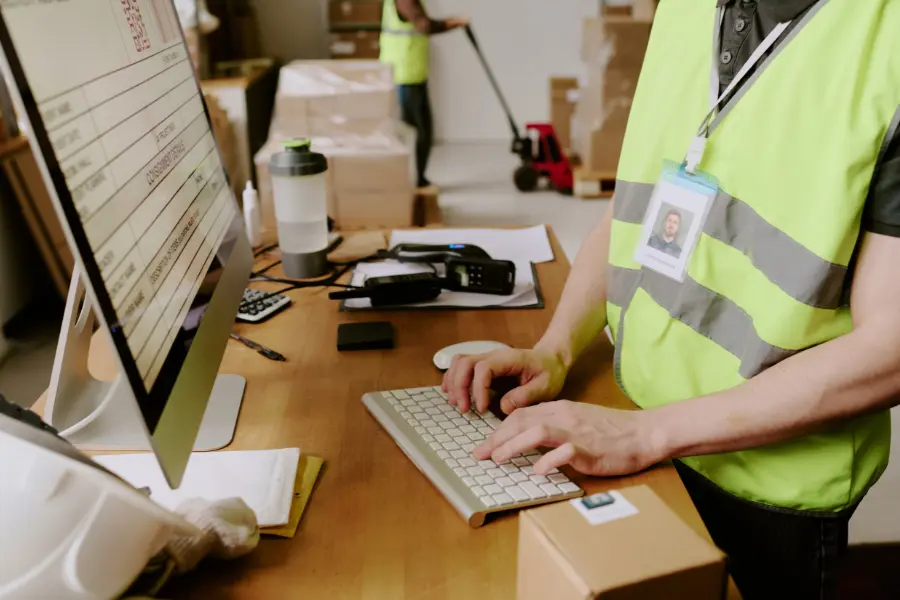
September marks the start of spring in South Africa, but for many businesses, it also signals a change in pace.
The quieter months start giving way to busier trading periods. Stock begins moving faster, orders increase, deliveries become more frequent and there is less room for mistakes.
For customers, an order might look simple: click, pay, receive.
Behind the scenes, there is a whole process keeping that order moving.
So, what does a typical day inside a busy warehouse actually look like?
7:00 AM: The first deliveries arrive
The day can start before most customers are thinking about their orders.
Incoming stock needs to be received, counted and checked against delivery documentation. Boxes need to go to the right area, paperwork needs to be recorded and discrepancies need to be flagged.
This is one of those situations where a simple date stamp or received stamp can become part of the routine.
A document marked with the date it was received provides an immediate reference when staff need to track deliveries later.
When several deliveries arrive throughout the day, having a consistent way of marking paperwork can make those records much easier to work through.
For businesses looking for ready-made options, RubberStampSA has a range of warehousing and logistics stamp templates designed around common industry requirements.
8:30 AM: The orders start moving
Once incoming stock has been dealt with, attention turns to outgoing orders.
Picking lists are printed. Products are located. Quantities are checked and orders begin making their way through the warehouse.
This is where accuracy matters.
A busy warehouse cannot rely on someone simply remembering which orders have been checked and which are still waiting. Processes need to be clear enough that another team member can understand what has happened at a glance.
A “CHECKED”, “PACKED” or “QUALITY CONTROL” stamp can provide a straightforward visual marker on paperwork.
It is not complicated technology. It is simply a quick way of recording that a particular step has happened.
10:00 AM: More stock, more paperwork
By mid-morning, the warehouse may be dealing with several things at once.
A courier has arrived. A supplier needs a document signed. An urgent customer order has been added. Someone is looking for a product that was received yesterday.
This is where warehouse administration becomes just as important as the physical movement of stock.
Documents may need to be:
- Received
- Checked
- Approved
- Filed
- Signed
- Dated
- Matched to an order
- Sent to another department
A custom stamp can be created around the specific processes a warehouse uses every day.
For example, a receiving stamp could include space for the date, initials and delivery reference, while a separate stamp could indicate that an order has passed a particular checking stage.
11:30 AM: The dispatch area gets busy
Orders that have been picked and checked now need to leave the building.
Packing teams are working through orders while dispatch staff prepare documentation and organise collections.
This is another point where small visual markers can help.
A stamp doesn’t replace a barcode, inventory system or digital tracking platform. Instead, it can work alongside those systems for the physical paperwork that still forms part of the process.
A clearly marked document can tell the next person in the process:
This has been checked.
This has been packed.
This has been approved.
That can be useful when multiple people handle the same order.
1:00 PM: The paperwork catches up
The physical work may slow down slightly around lunchtime, but the administration doesn’t disappear.
Documents need to be filed. Delivery notes need to be matched with orders. Completed paperwork needs to reach accounts or management.
This is where numbering stamps can also become useful.
Warehouses often deal with references, batches, forms, stock records and other documents where sequential numbers need to be recorded. A Trodat Professional Numberer is designed for repetitive numbering tasks, with options for different numbers of bands and models that can include custom text or images.
It is a small tool, but for a process that involves repeatedly adding numbers to physical documents, it can become part of the daily workflow.
2:00 PM: The afternoon rush
The afternoon can bring another wave of orders, particularly for businesses preparing for a busy trading period.
Spring can be an important time for many industries. Retailers may be preparing for increased demand, manufacturers may be increasing production and online businesses may be getting ready for promotional periods later in the year.
The warehouse needs to be ready for that increase.
That means knowing what stock is available, keeping orders moving and making sure processes are consistent even when things get busy.
This is where seemingly small tools can become useful.
A stamp that saves five seconds on one task may not sound significant. But repeat that task dozens or hundreds of times and the time saved becomes much more noticeable.
3:00 PM: Dates matter more than you think
As the day continues, documentation starts building up.
Delivery notes, receiving records, inspection sheets and other paperwork may all need to show when something happened.
This is where a professional dater can be useful.
RubberStampSA’s Trodat Professional Daters combine a date with space for custom text and, on suitable models, a logo. They are available with English or ISO date formats, making them useful for businesses that need consistent date marking across their paperwork.
Instead of writing the date repeatedly, staff can apply it quickly and move on to the next task.
3:30 PM: The final collections
The day’s final courier collections are being prepared.
Orders are checked one last time, paperwork is completed and the dispatch area starts to clear.
For warehouse teams, this is when it becomes particularly important to know which orders have actually completed each stage.
A simple stamp can give physical paperwork a clear status without requiring someone to write the same information repeatedly.
And because custom stamps can be made with specific wording, they can be designed around the actual terminology used by a particular warehouse.
4:30 PM: One last check
Before the day ends, there is usually one more look at what came in, what went out and what still needs attention tomorrow.
The warehouse may look quieter, but the paperwork tells the story of the day.
Deliveries have been received.
Orders have been checked.
Products have been packed.
Documents have been filed.
The process starts again tomorrow.
Why stamps still have a place in a modern warehouse
Warehouses are becoming increasingly digital, but that doesn’t mean every physical document has disappeared.
Delivery notes, checklists, labels, forms and other paperwork can still form part of day-to-day operations.
A rubber stamp is not intended to replace warehouse management software or digital tracking systems. It is a practical tool for the parts of the process that still happen on paper.
And because a business can customise the wording, size and layout of a stamp, it can be created for a very specific task.
That might be a date stamp, a receiving stamp, a quality-control stamp, a company stamp or something designed specifically around an internal process.
Spring is a good time to review the process
The end of September is a useful point for businesses to look at the systems they rely on every day.
What is being written repeatedly?
Which documents are being manually marked?
Where are delays happening?
Are there simple steps that could be made more consistent?
These questions don’t always lead to major changes. Sometimes they simply highlight a few small improvements that could make a busy season easier to manage.
For warehouses, that might mean reviewing everything from stock organisation to dispatch procedures — including the small tools used to keep physical paperwork moving.
Because behind every order that arrives at a customer’s door is a process involving people, products, paperwork and plenty of small details.
And sometimes, one of those details is a rubber stamp.
 2019 brew by