


 0861 999 083


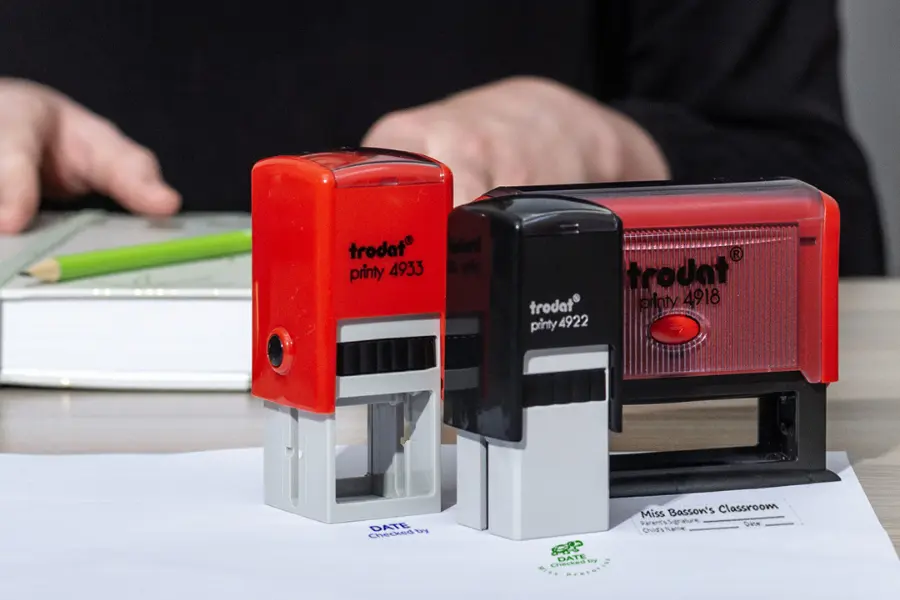
With school holidays underway across South Africa, many teachers and school administrators are using the quieter period to reset classrooms, organise resources and prepare for the next term.
While lesson plans and stationery usually make the checklist, one classroom tool is often overlooked: custom stamps.
For schools, stamps are not simply about marking books faster. They help standardise communication, reduce repetitive admin, create consistent feedback and free up more time for teaching.
Here is how schools across South Africa are using custom stamps in practical ways and what educators should consider when preparing for the new term.
Why Schools Still Use Stamps in a Digital World
South African classrooms continue to balance digital tools with paper-based learning, parent communication and physical administration.
Teachers are often managing:
- Homework checks
- Exercise book marking
- Assessment tracking
- Parent communication
- Attendance administration
- Classroom rewards
- Resource organisation
- Department approvals
Even where schools use digital platforms, classroom paperwork remains part of daily operations. Teacher stamps offer a simple way to reduce repetitive writing while keeping feedback clear and consistent.
Schools looking for ideas can explore education-specific options through education stamp templates, designed around common classroom and school administration requirements.
Faster Marking Without Losing Meaningful Feedback
Marking can quickly become one of the most time-consuming parts of teaching.
Custom teacher stamps help educators provide fast visual feedback while still leaving room for personalised comments.
Common classroom examples include:
- Well Done
- Excellent Improvement
- Complete and Correct
- Needs Revision
- Parent Signature Required
- Homework Outstanding
- Reading Checked
- Date Received
Teachers often find that repeated comments become ideal candidates for stamps because they reduce repetitive writing while keeping feedback consistent.
A dedicated range of teacher stamps can help educators create quicker feedback loops while maintaining consistency across classes.
Classroom Organisation Beyond Marking
One of the biggest opportunities for stamps is not grading at all.
Schools use custom stamps to create structure and consistency across classrooms.
Examples include:
Resource and Book Ownership
Libraries, reading programmes and classroom packs can be marked quickly and consistently.
Homework Tracking
Teachers can stamp submission dates, parent acknowledgement requests or assignment checkpoints.
Assessment Control
Departments can standardise moderation, received dates and reviewed work.
Student Motivation
Positive reinforcement remains an effective classroom tool and visual recognition can make feedback more immediate and memorable.
Reward systems have also evolved beyond simple approval marks. Solutions like Stamp N Stick classroom rewards combine stamping with interactive recognition that younger learners often enjoy.
Supporting Specialist Subjects and School Environments
Custom stamps are also useful outside traditional classroom marking.
Examples include:
- Foundation phase encouragement
- Library administration
- Sports department sign-offs
- Health and wellness activities
- School event participation
- Department approvals
Schools introducing health awareness, wellbeing activities or themed learning programmes may also incorporate specialty designs such as the Lub Dub stamp where relevant to their activities.
Back-to-School: A Good Time to Re-equip Classrooms
School holidays create a useful planning window because educators can review what slowed them down during the previous term.
Questions worth asking:
- Which comments do I write repeatedly?
- Which classroom processes feel manual?
- What could be standardised?
- Which supplies need replacing?
- What would save time every week?
Small changes can have a noticeable effect over an entire school year.
For schools planning ahead, reviewing available education stamp solutions before the next term starts can help reduce setup time later.
Looking Beyond the Classroom
Schools are increasingly thinking about efficiency in small ways that compound over time.
A stamp cannot reduce class sizes or shorten the curriculum, but it can remove repeated admin, improve consistency and help teachers spend more time where it matters: teaching and engaging with learners.
As classrooms prepare for the next term, practical tools that simplify everyday tasks are often the ones that make the biggest difference.
Classrooms that feel organised usually rely on systems that are simple to repeat — and small tools can often play a bigger role than expected.
 2019 brew by